It's Not Just "Ozempic Face"
You've probably heard the term.
For a while, "Ozempic face" was explained simply as rapid weight loss: lose enough fat, and inevitably some of it comes from your face.
But emerging research suggests the story may be more complicated.
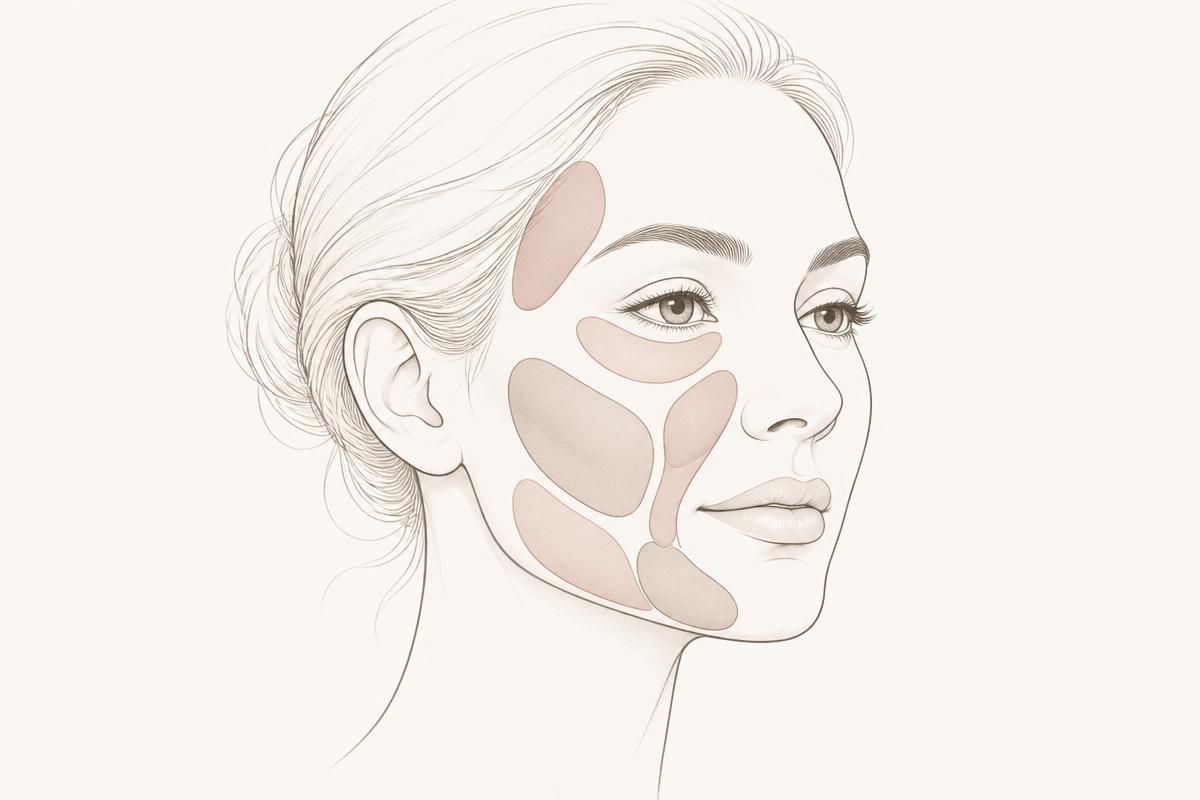
Medication-assisted weight loss may not affect facial fat exactly the same way as traditional weight loss. Researchers are investigating whether GLP-1 medications may have effects on particular fat compartments that could help explain why facial volume loss can sometimes appear especially noticeable.
The science here is still evolving, so we don't think it's accurate to say the medication simply "ages your face."
What we can see clinically is that weight loss can occur across multiple areas and layers of the face.
As facial fat compartments deflate, areas that previously looked full can become hollow. Temples can look deeper. Cheeks can flatten. Under-eyes can become more noticeable. The jawline can lose support, and skin that previously had more underlying volume may appear looser.
Recent research on GLP-1-associated weight loss describes changes including midface volume loss, temple and under-eye hollowing, increased skin laxity and more noticeable folds and wrinkles.
The Answer Isn't Just Putting All the Volume Back
If someone loses a significant amount of weight, our goal isn't necessarily to replace every bit of facial volume they lost.
You probably don't want your old face back.
Weight loss can reveal beautiful facial structure. Cheekbones become more visible. The lower face can become leaner. The jawline may become more defined.
The goal is figuring out which changes improved the face—and which ones made it look older, tired or less supported.
That's very different from simply saying, "You lost volume, so let's add filler."
This Is Where Combination Treatment Matters
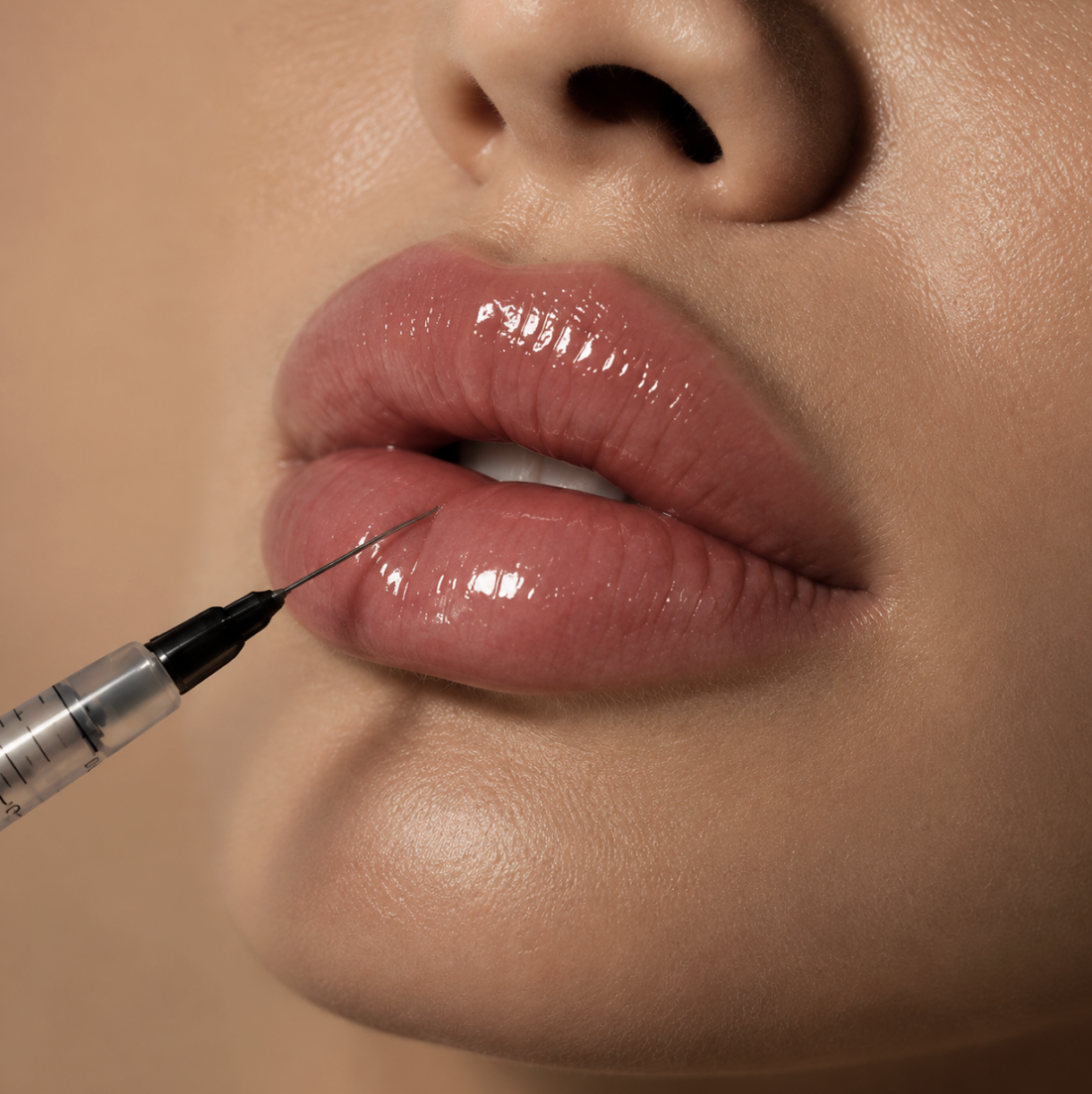
For some patients, targeted hyaluronic acid filler can restore structural support or replace volume exactly where it's needed.
For others, biostimulators such as Sculptra or Radiesse may make sense to improve tissue quality and stimulate collagen.
Skin laxity and texture may require an entirely different approach: lasers, microneedling, energy-based treatments or other skin-focused modalities.
Increasingly, the best result may involve a little bit of several things rather than a lot of one thing.
That's particularly important after major weight loss because we're not dealing with one isolated problem. We're looking at changes in volume, skin, support and facial proportions at the same time.
When Should You Start?
Do you wait until you've lost every pound you plan to lose?
Not necessarily.
Your face can continue changing throughout the weight-loss process, so we generally don't want to aggressively chase every change with filler.
But that doesn't mean you always need to wait until the very end either.
Collagen stimulation and skin-quality treatments may make sense earlier for certain patients, while more definitive structural correction can be planned once weight is closer to stable.
The right timing depends on how quickly you're losing weight, how much more you expect to lose and what we're actually trying to correct.
The New Weight-Loss Face
GLP-1 medications have changed much more than weight-loss medicine.
They're changing aesthetic medicine too.
And the answer isn't to fear weight loss—or automatically fill every hollow that appears.
It's understanding that your face after weight loss may need a different aesthetic strategy than your face before it.
Sometimes that's filler.
Sometimes it's collagen stimulation.
Sometimes it's skin tightening.
And sometimes the weight loss reveals facial structure that we shouldn't touch at all.
The goal isn't to replace what you lost. It's to decide what was actually worth replacing.
Sources & Further Reading
- Dermatologic Surgery (2026) — GLP-1-Induced Weight Loss and the Face: Anatomical Mechanisms and Rationale for Collagen-Stimulating and Volumizing Aesthetic Treatments
- Aesthetic Surgery Journal (2026) — Nonsurgical Aesthetic Treatment of the Face and Neck in GLP-1 Receptor Agonist Weight Loss Patients: Experience-Based Considerations
- Journal of Craniofacial Surgery (2026) — Losing Weight and Gaining Wrinkles: The Impact of Weight Loss Drugs on Facial Aesthetics
- Aesthetic Plastic Surgery (2026) — Effects of GLP-1 Receptor Agonists on Skin Quality: A Comprehensive Literature Review
- Mechanisms of Glucagon-Like Peptide 1 Receptor Agonist-Induced Facial Lipodystrophy and a Path Toward Prevention